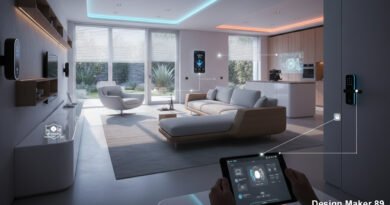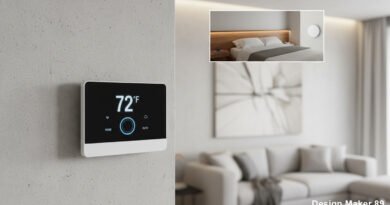
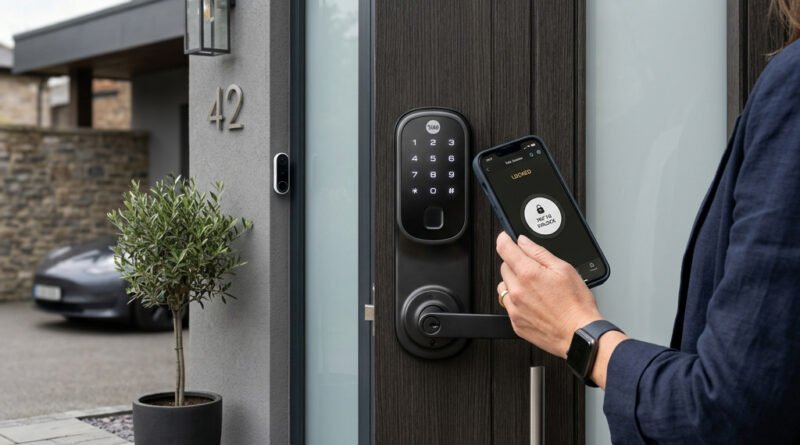
The Smart Lock Trap | Is Your Digital Key a Security Risk?
In 2026, Advanced Residential Smart Lock Security is a billion-dollar industry. We love the idea of “Keyless Entry”—no more fumbling for keys in the dark or worrying if we locked the door after leaving. You can grant temporary access to delivery drivers or guests from across the world. It feels like the future of Home Automation. But here is the “unlocked” truth: every digital connection is a potential door for a hacker, and every battery-operated motor is a mechanical failure waiting to happen. If you want to protect your family, you must understand the “Physical vs. Digital” battle.
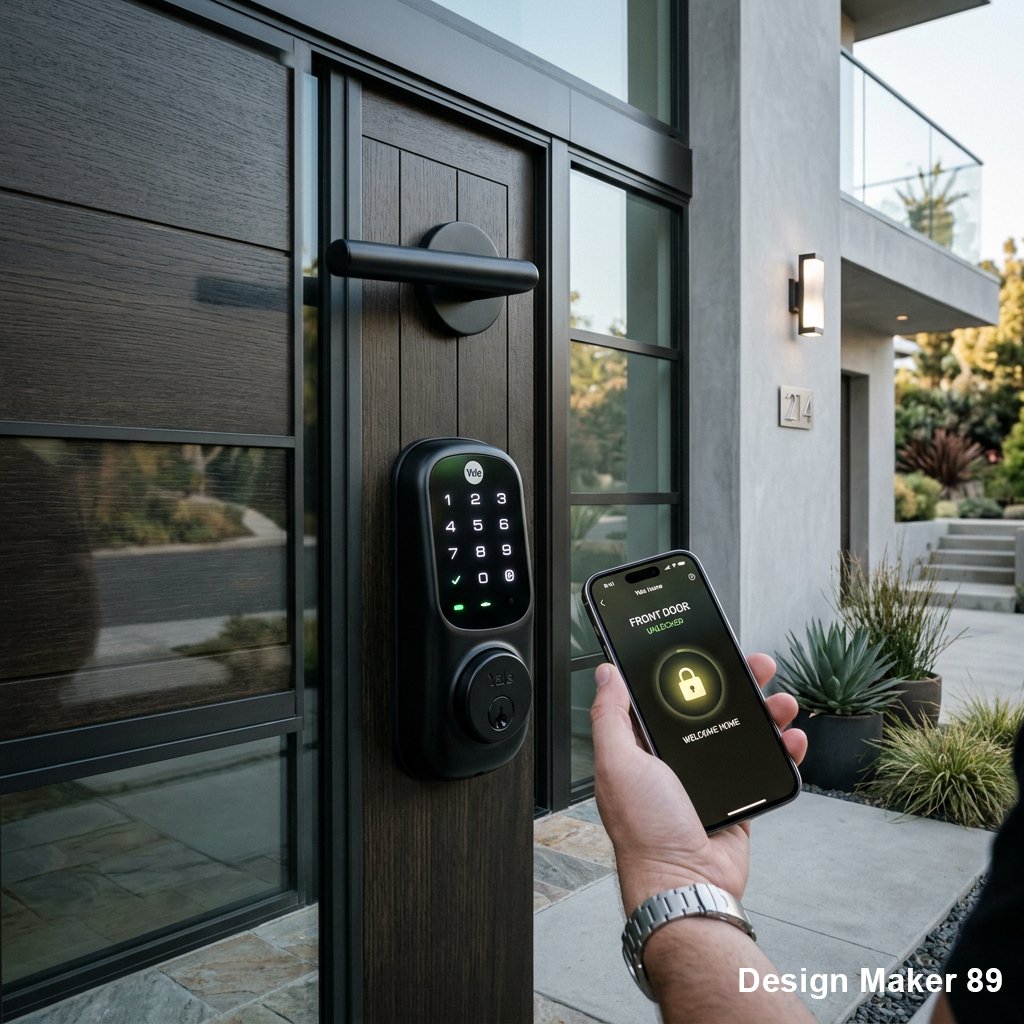
The “Battery Death” Lockout
The most common failure in Advanced Residential Smart Lock Security is the simplest one: the batteries die. While most locks warn you weeks in advance, life happens, and people forget.
I recently assisted a homeowner who was locked out in a winter storm because his smart lock’s batteries drained faster than expected due to the extreme cold. The Lesson: Electronic motors struggle in freezing temperatures. If your smart lock doesn’t have a “Physical Key Overlay” (a hidden keyhole) or an external emergency power jump-start (like a 9V battery contact), you are one dead battery away from a $200 locksmith bill. Never buy a lock that is 100% digital with no backup.
The “Software Glitch” Phantom Opening
We’ve seen it in 2026: “Smart” devices that update their firmware in the middle of the night and reboot. In rare but terrifying cases, a bug in the code can cause the deadbolt to retract.
I once consulted for a family whose smart lock unlocked itself every time their Wi-Fi router rebooted. It was a “failsafe” error in the Home Automation settings. The Fix: Always disable “Auto-Unlock based on Proximity” if you live in an apartment or a busy street. It’s a cool feature, but if your phone’s GPS “glitches” and thinks you’re home while you’re actually just driving past, your front door could swing open for anyone.
The “Jamming” and Mechanical Stress Issue
Most Advanced Residential Smart Lock Security systems are just motors trying to turn a standard deadbolt. If your door is slightly misaligned or if the weather makes the wood swell, the motor will “jam.”
I’ve seen dozens of burned-out smart locks because they were struggling to push the bolt into a hole that didn’t line up perfectly. The Advice: Before installing Home Automation locks, ensure your door closes perfectly with zero effort. If you have to “pull” or “push” the handle to get the manual key to turn, a smart lock will fail within three months.
The Cybersecurity “Backdoor”
In 2026, the real “lockpick” is a laptop. Cheap, off-brand Advanced Residential Smart Lock Security units often have weak encryption.
Hackers don’t need to break your window; they just need to “sniff” your Bluetooth signal or exploit a vulnerability in the manufacturer’s cloud server. The Pro Tip: Only buy locks that use “AES-128” or “AES-256” bit encryption and support “Two-Factor Authentication” (2FA) for their apps. If the brand isn’t a well-known security company (like Schlage, Yale, or August), you are risking your Home Automation safety on unproven code.
The “Deadbolt” Strength Illusion
People often spend $300 on the “smart” part of the lock but ignore the “bolt” part. A smart lock is only as strong as the metal bar it slides into the wall.
Many Advanced Residential Smart Lock Security kits use thin, low-grade metal that can be easily kicked in. The Strategy: Look for “Grade 1 Certified” locks. This is the highest level of residential security. A “Grade 1” smart lock with a long, reinforced strike plate is a fortress; a “Grade 3” plastic smart lock is just an expensive toy that gives you a false sense of security.
Why Trust Design Maker 89?
At Design Maker 89, we believe that “Smart” should never mean “Vulnerable.” Our security experts have backgrounds in both locksmithing and ethical hacking. We analyze Advanced Residential Smart Lock Security from both sides: the physical door and the digital cloud. We know that true Home Automation should give you peace of mind, not a new list of things to worry about. Our mission is to help you secure your home in 2026 with technology that is as reliable as it is innovative.
read more about
The Smart Blinds Scam | Luxury Convenience or Battery Nightmare?
The Automatic Water Bowl Trap | Is Your Tech Poisoning Your Pet?
The Smart Mirror Scam | Why Your Bathroom Doesn’t Need a Screen
The Self-Cleaning Window Scam | Is Your Glass Actually Working?
The Self-Cleaning Oven Trap | Is It Killing Your Appliance?
The Smart Fridge Trap | Why Your Kitchen Doesn’t Need Wi-Fi
The Smart Thermostat Hoax | Will It Actually Lower Your Bills?