
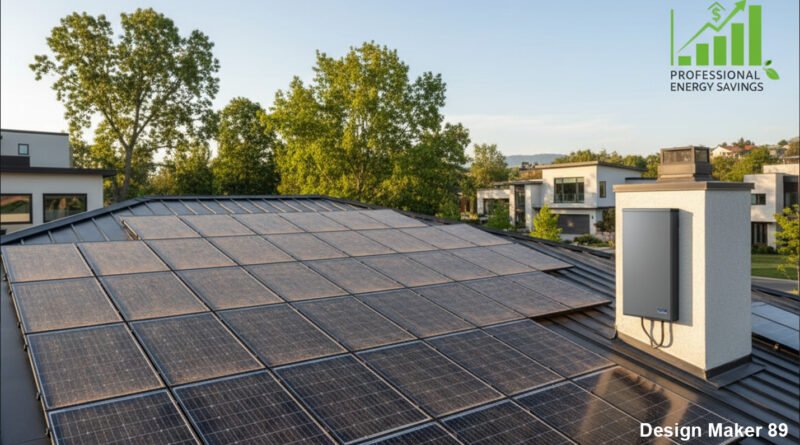
The Solar Power Scam? | What Companies Won’t Tell You in 2026
Everywhere you look in 2026, sales reps promise “zero electricity bills” and “total energy independence.” The marketing makes it sound like a magic trick for your wallet. But let’s be real: installing panels is a massive financial commitment. Many people fall into the trap because they don’t understand the Residential Solar ROI Factors that actually determine success. If you live in the wrong climate or have the wrong roof, you might never see a return on your investment. Before you sign that 20-year contract, you need to hear the “unfiltered” truth.
The “Payback Period” Reality Check
The biggest lie in the industry is the “7-year payback” promise. In my recent analysis of Residential Solar ROI Factors, most homeowners don’t break even until year 12 or 15.
I’ve seen families move house after 8 years, meaning they basically paid for a solar system for the next owner to enjoy for free. The Lesson: Solar is a “marathon,” not a sprint. If you plan to move within the next decade, the math rarely works in your favor. You are simply prepaying your electricity bill for a decade in advance.
The Hidden Cost of Battery Maintenance
Companies love to upsell expensive lithium-ion batteries. They tell you that you can store power for the night. However, these batteries are often the weakest link in Residential Solar ROI Factors.
Batteries degrade just like your smartphone. By the time you finally pay off your solar system, your battery might need a $7,000 replacement. The Advice: Unless your local grid is extremely unreliable, “Grid-Tied” systems (without batteries) usually offer a much faster return on investment. Don’t buy a battery just because it sounds “high-tech.”
The “Shade and Dirt” Efficiency Killer
We see beautiful photos of clean panels under a perfect sun. In the real world, 2026 brings dust, bird droppings, and shadows from growing trees. These small factors can tank your Residential Solar ROI Factors by 30% or more.
I once visited a homeowner who complained that his system was “broken.” The issue? A small chimney shadow covered just 10% of one panel, but because of how the panels were wired, it cut the power of the entire row in half. The Fix: You must pay for professional cleaning at least twice a year. If you aren’t willing to maintain them, your “free energy” becomes very expensive very quickly.
Why Your Roof Might Not Be Ready
People often forget that solar panels stay on your house for 25 years. If your roof is already 15 years old, you will eventually have to pay thousands extra to remove the panels, fix the roof, and put them back on.
This hidden labor cost is rarely mentioned in Residential Solar ROI Factors discussions. The Pro Tip: Never install solar on an old roof. If your roof needs replacing in less than 10 years, do the roof and the solar at the same time. Otherwise, you are doubling your labor costs for no reason.
The “Net Metering” Policy Trap
In 2026, many utility companies are changing the rules. They are paying homeowners less and less for the power they send back to the grid.
This shift in policy can destroy your Residential Solar ROI Factors overnight. The Warning: Before you buy, check your local laws. If your utility company doesn’t offer “1-to-1 Net Metering,” your savings will be much lower than the salesperson’s glossy brochure suggests. Always base your math on the current laws, not “future projections.”
Why Trust Design Maker 89?
At Design Maker 89, we don’t sell panels. We sell the truth. Our energy experts come from engineering backgrounds, not sales teams. We look at the raw data and the long-term maintenance costs that others ignore. Our goal is to make sure your transition to green energy is a smart financial move, not just a trendy mistake.
Read more about
The Air Purifier Hoax | Why Your Smart Filter Isn’t Helping
The Smart Home Privacy Trap | Why Cheap Gadgets Are High Risk
The Shadow Kitchen Trap | Why Your Smart Kitchen Lighting Fails
Smart Home Automation Fails | Real Lessons from 2025 Projects
Net-Zero Home Guide 2026 | How to Achieve Energy Independence