The Vertical Veggie Fail | Why Your Home-Grown Food Is Dying
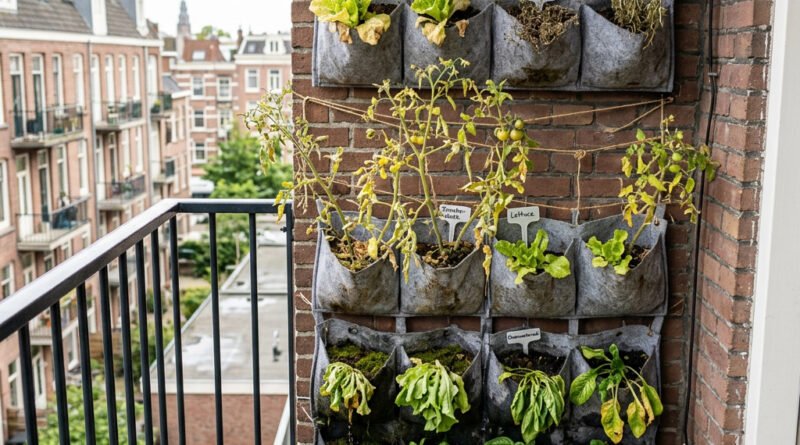
In 2026, the dream of picking fresh lettuce and tomatoes from a wall in your balcony is peak “urban living.” Efficient Vertical Vegetable Gardening promises high yields in tiny footprints. You see these lush green towers on Pinterest and think, “I can do that!” But here is the reality: a vegetable is a high-energy factory that needs far more resources than a simple ivy or fern. Most vertical systems are designed for aesthetics, not for the heavy root systems of a tomato plant. If you don’t adjust your strategy, you’ll end up with a wall of withered stems instead of a salad.
The “Gravity” Watering Disaster
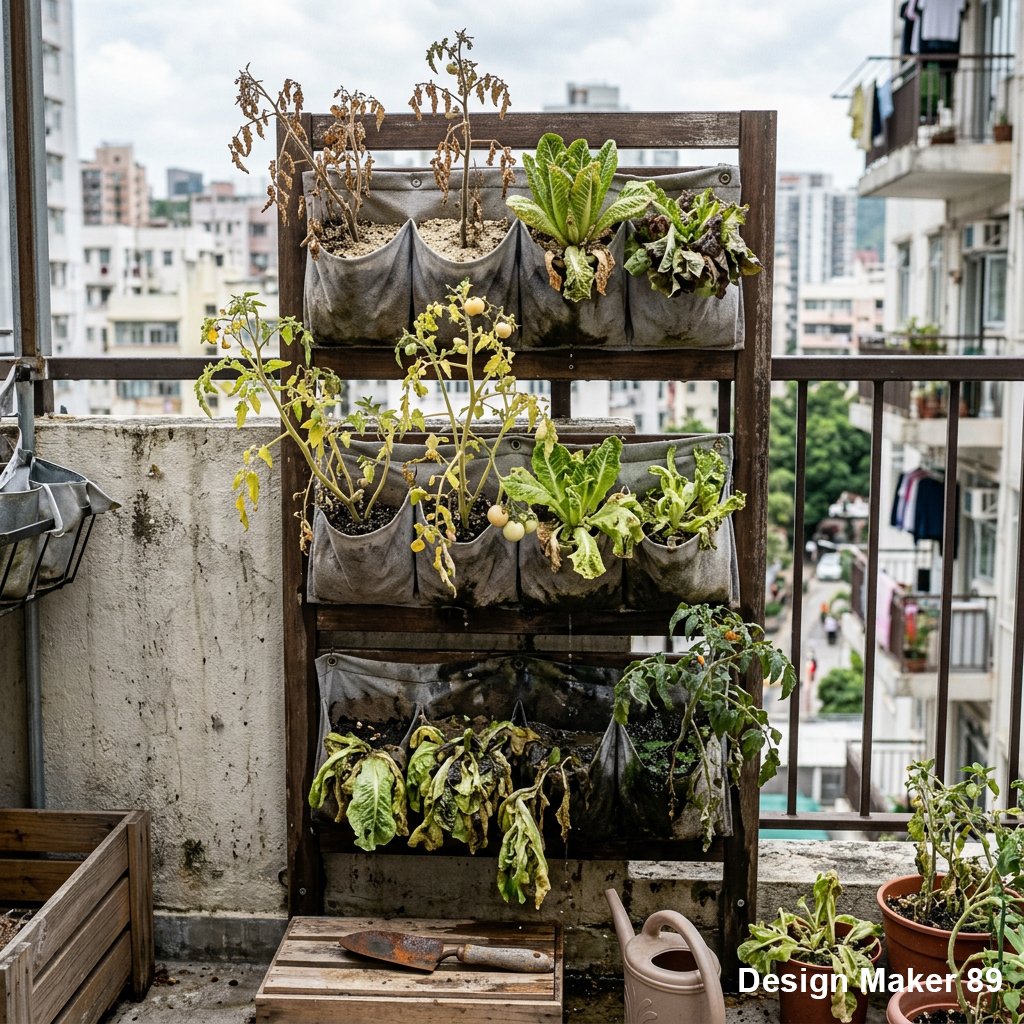
The most common mistake in Efficient Vertical Vegetable Gardening is unequal water distribution. In a vertical tower, gravity pulls all the water to the bottom.
I recently visited an urban garden where the top row of strawberries was bone-dry and “crispy,” while the bottom row of kale was literally drowning in stagnant water. The Lesson: You cannot water a vertical garden like a flat one. You need a “Pressure-Compensated” drip system that ensures the top plant gets the exact same amount of water as the bottom one. Without this, your vertical garden is just a “survival of the fittest” experiment.
The “Light Shadow” Mystery
We often forget that plants at the top of a vertical wall cast shadows on the plants below. This is a major hurdle for Efficient Vertical Vegetable Gardening.
I’ve seen many growers put sun-loving peppers at the bottom, only to have them stunted because the giant leaves of the zucchini above blocked 80% of the sunlight. The Fix: You must map your “Vertical Light Zones.” Put heat-tolerant, sun-hungry plants at the very top and shade-tolerant herbs (like mint or parsley) at the bottom. Vertical Gardening is a 3D puzzle where light is your most precious currency.
Why Root Space Is the “Invisible” Wall
Vegetables need deep roots to produce fruit. Many Efficient Vertical Vegetable Gardening kits use tiny pockets that are only 10cm deep.
A tomato plant’s roots can naturally grow 60cm deep. When you cram it into a small vertical pocket, it becomes “root-bound,” stops growing, and refuses to produce fruit. The Advice: Only use vertical systems for “shallow-root” crops like lettuce, spinach, radishes, and herbs. If you want vertical tomatoes, you need a “Vining” strategy in a large floor pot, not a pocket on a wall.
The Nutrient Wash-Out Problem
In a vertical system, frequent watering is required because the small amount of soil dries out fast. This constant flow “flushes” the nutrients out of the soil every few days.
I’ve seen dozens of “Yellow Walls” where the plants were starving despite being watered daily. The Strategy: For successful Efficient Vertical Vegetable Gardening, you must use “Fertigation” (adding liquid nutrients to your water) or slow-release organic pellets. You are essentially running a hydroponic system even if you are using soil; you have to feed the plants constantly because the “pockets” cannot hold a large food reserve.
The “Micro-Climate” Heat Trap
Vertical walls, especially those made of black plastic or felt, absorb massive amounts of heat from the sun. In the peak of a 2026 summer, the soil temperature in a vertical pocket can reach 40°C.
This literally cooks the roots. I once saw a beautiful herb wall turn into “dried oregano” in a single weekend because the wall faced a reflective glass window. The Pro Tip: Use light-colored containers and ensure there is an air gap between the vertical garden and the building wall. This “breathability” is a core part of Vertical Gardening that prevents your vegetables from overheating before they even bloom.
Why Trust Design Maker 89?
At Design Maker 89, we believe that “Green Design” should be productive, not just decorative. Our horticultural experts have tested vertical systems from simple DIY pallets to high-tech aeroponic towers. We know the difference between a system that looks good in a photo and one that actually puts food on your table. Our mission is to help you master Vertical Gardening so you can enjoy the true taste of home-grown success in 2026.
Read more about
The Fiddle-Leaf Fig Hoax | Why Your Luxury Plant Is Losing Leaves
The Self-Watering Death Trap | Why Your Plants Are Drowning
The Air Plant Lie | Why Your Tillandsia Is Dying
The Privacy Tree Trap | Why Your Green Wall Is Dying
The Runway Effect | Why Your Outdoor Lighting Fails to Impress
The Vertical Garden Myth | Why Your Green Wall Fails in One Month
Why Your Balcony Edible Garden Fails | Real Success Tips for 2026