
Retaining Walls 101 | Why DIY Stone Walls Fail
Retaining Walls 101 | Why Your DIY Stone Wall Will Likely Collapse
In 2026, Backyard Landscaping projects often include retaining walls to create leveled terraces or to manage sloped terrain. These structures add significant visual value and usable space to a garden. However, a mechanical reality remains: a retaining wall is a functional engineering element, not just a decorative border. If you don’t understand “Hydrostatic Pressure” and “Foundation Depth,” your beautiful stone wall will eventually lean, crack, and collapse under the weight of wet soil.
The “Hydrostatic Pressure” Silent Killer
The biggest mistake in contemporary landscape construction involves ignoring water drainage. Soil expands and becomes incredibly heavy when it rains.
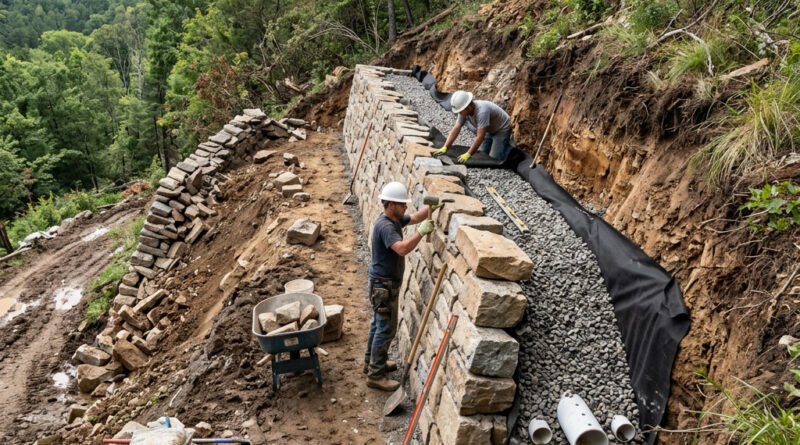
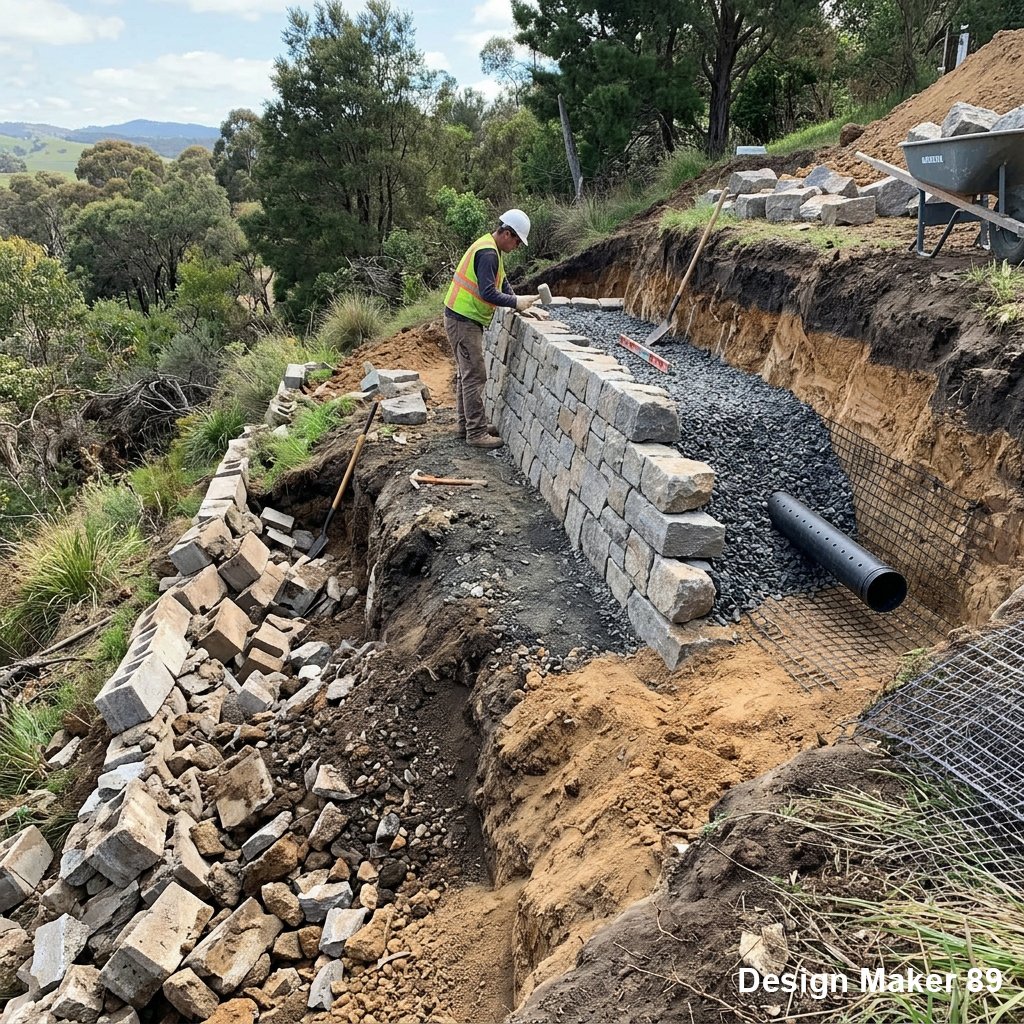
I recently inspected a collapsed timber wall where the homeowner had forgotten to install “Weep Holes” or a drainage pipe. The trapped water created enough pressure to push a 2-ton wall forward like it was made of cardboard. The Lesson: Water must have an escape route. According to The American Society of Civil Engineers (ASCE), 90% of retaining wall failures are caused by poor drainage, not weak materials. For successful Backyard Landscaping, you must install a perforated pipe behind the wall surrounded by crushed gravel to redirect water away from the structure.
The “Foundation Depth” Stability Error
In 2026, many DIY enthusiasts build their walls directly on top of the soil or a thin layer of sand.
I’ve seen dozens of stone walls that started to “heave” and tilt after the first winter because the foundation wasn’t deep enough to reach the frost line or stable subsoil. The Fix: You must bury the first course of blocks or stones. A general rule for Backyard Landscaping is that 10% of the wall’s height should be underground. This “Keyway” prevents the base from sliding forward. If your wall is 1 meter high, at least 10cm of it should be buried in a compacted gravel trench.
Why “The Lean” (Batter) Is Structurally Necessary
A common technical mistake in Backyard Landscaping is building a wall perfectly vertical (90 degrees).
My Personal Experience: I once assisted a client who insisted on a perfectly straight wall for a “modern look.” Within two years, the natural settling of the earth made the wall look like it was tipping over. The Advice: Always build with a “Batter”—a slight backward lean toward the hill. This uses gravity to help the wall resist the soil’s outward push. For expert tutorials on gravity wall physics, refer to The National Concrete Masonry Association (NCMA) technical manuals. A wall that leans back 5 degrees is significantly stronger than a vertical one.
The “Backfill” Material Disaster
Homeowners often use the same dirt they excavated to fill the space behind the wall. In 2026, this remains the primary cause of wall “bulging.”
I’ve seen walls fail because they were backfilled with heavy clay that holds water like a sponge. The Pro Tip: Only use “Clean Crushed Stone” or gravel for the first 12 inches behind the wall. This material doesn’t compact or hold water, ensuring that the pressure against your Backyard Landscaping structure remains constant and manageable.
The “Over-Height” Permit Danger
Most regions have legal limits on how high a homeowner can build a wall without a structural engineer’s stamp.
The Strategy: In most areas, any wall over 3 feet (approx. 90cm) requires a professional permit and specific engineering calculations. If you try to build a 5-foot wall as a DIY project, you are risking a massive legal and safety liability. True Backyard Landscaping mastery means knowing when to pick up a shovel and when to call a professional engineer. If the wall is taller than your waist, it’s no longer a “weekend project.”
Why Trust Design Maker 89?
At Design Maker 89, we believe that “Beauty Must Be Built to Last.” Our landscaping specialists combine aesthetic design with civil engineering principles. We know that in 2026, many “how-to” videos skip the boring-but-essential structural steps. We test soil types, drainage solutions, and block interlocking systems to ensure your garden remains safe for decades. Our mission empowers you to build Backyard Landscaping features that stand the test of time, weather, and gravity.
read more about
Backyard Landscaping | The Artificial Grass Myth
The Smart Hydroponics Scam | Is Your “Free” Salad Costing You $50?
The Zero-Maintenance Lie | Why Gravel and Turf Might Be a Mistake
The Vertical Veggie Fail | Why Your Home-Grown Food Is Dying
The Fiddle-Leaf Fig Hoax | Why Your Luxury Plant Is Losing Leaves