Floating Shelf Stability | The Structural Disaster
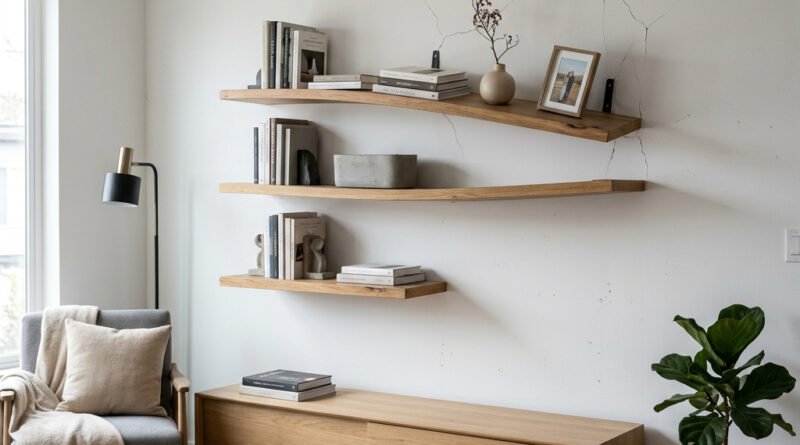
In 2026, Structural Floating Shelf Stability defines the success of a minimalist home. These sleek additions offer a “weightless” touch to your walls, appearing to defy gravity. However, a mechanical reality remains: gravity never sleeps. Most store-bought shelves use weak internal brackets that cannot support real-world items. If you don’t understand wall studs and torque, your beautiful display will slowly turn into a sagging safety hazard.
The “Drywall Anchor” Failure
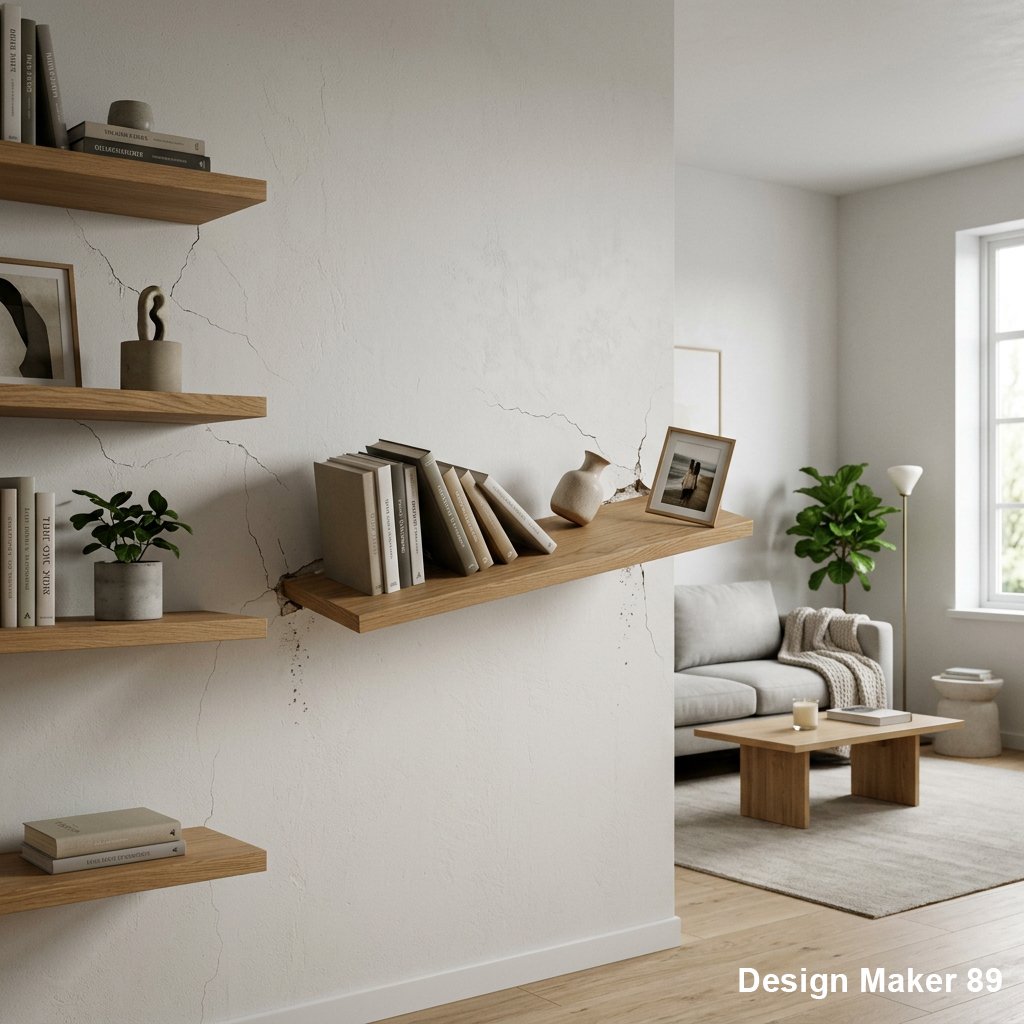
The biggest mistake in contemporary lounge layouts involves trusting plastic drywall anchors. I recently inspected a home where three shelves had literally ripped holes out of the wall.
The Lesson: A floating shelf acts as a “lever.” Every inch the shelf sticks out multiplies the downward force. Drywall alone cannot resist this prying force. According to ASTM International standards for structural fasteners, you must screw brackets directly into wooden or metal “Studs.” If you miss the studs, you are just waiting for a crash.
Avoiding Sagging Brackets in Modern Living Area Concepts
Cheap, mass-produced hardware often includes thin, hollow metal rods. I’ve seen dozens of shelves tilt downward after just three months because low-grade steel cannot manage the weight.
The Fix: Look for “Heavy-Duty Solid Steel” brackets. A professional-grade system uses a thick backplate and solid rods. If the bracket feels light or flimsy at the store, it will sag on your wall. High-quality Structural Floating Shelf Stability starts with the hardware you cannot see.
Why Depth Impacts Internal Wall Safety
Manufacturers sell 12-inch (30cm) deep shelves to maximize storage, but this creates massive structural stress. I once advised a client against using deep shelves for a heavy “Home Bar” setup due to leverage risks.
The Advice: Keep your profiles shallow—ideally 6 to 8 inches (15-20cm). The deeper the shelf, the more it pulls against the top screws. For expert guidance on load-bearing walls, refer to This Old House tutorials. If you want the “floating” look, stick to lightweight decor.
The “Particle Board” Core Trap
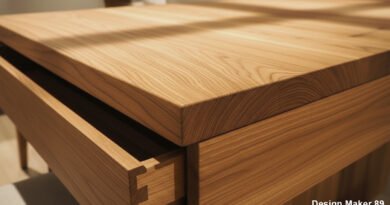
Many modern furniture pieces use “Honeycomb” paper or particle board. These materials are too soft to hold the internal bracket securely. I’ve seen shelves slide off their brackets because the wood-composite stripped away.
The Pro Tip: Invest in “Solid Wood” or high-quality “Plywood.” These materials provide a “bite” for the internal set-screws. In the world of Structural Floating Shelf Stability, a light shelf is often a weak shelf.
Why Trust Design Maker 89?
At Design Maker 89, we balance style with stability. Our team includes structural engineers who understand that beauty must be safe. We test hardware limits, wall-load capacities, and material durability. Our mission empowers you to achieve Structural Floating Shelf Stability that stays level and beautiful for as long as you live in your home.
read more about
Modern Living Room Design Ideas | The Hardwood Look-Alike Scam
The Zero-VOC Paint Scam | Are You Still Breathing Toxic Fumes?
The Gray Prison | Why Your “Minimalist” Living Room Is Making You Sad
The Anti-Fog Mirror Myth | Why Your Shower View is Still Blurry
The Electric Fireplace Scam | Luxury Ambiance or Expensive Light Show?
The Copper Cookware Scam | Is It Worth the $500 Price Tag?
The Lighting Over-Design Trap | Does Your Living Room Need 6 Zones?