
Smart Irrigation Systems | Why Smart Sprinklers Rot Plants
Smart Irrigation Systems | Why Your Intelligent Sprinkler Is Rotting Your Plants
In 2026, Smart Irrigation Systems represent the pinnacle of outdoor home automation. Manufacturers promise that by using real-time weather data, local soil sensors, and advanced evaporation algorithms, these controllers will save you 50% on your water bill while producing a lush, green landscape. However, a biological and horticultural reality remains: plants do not respond to data; they respond to soil physics. If you blindly trust automated “Smart Schedules” without understanding root asphyxiation, your high-tech system will likely overwater your garden, rotting your plants from the roots up.
The “Frequent Shallow Watering” Root Crisis
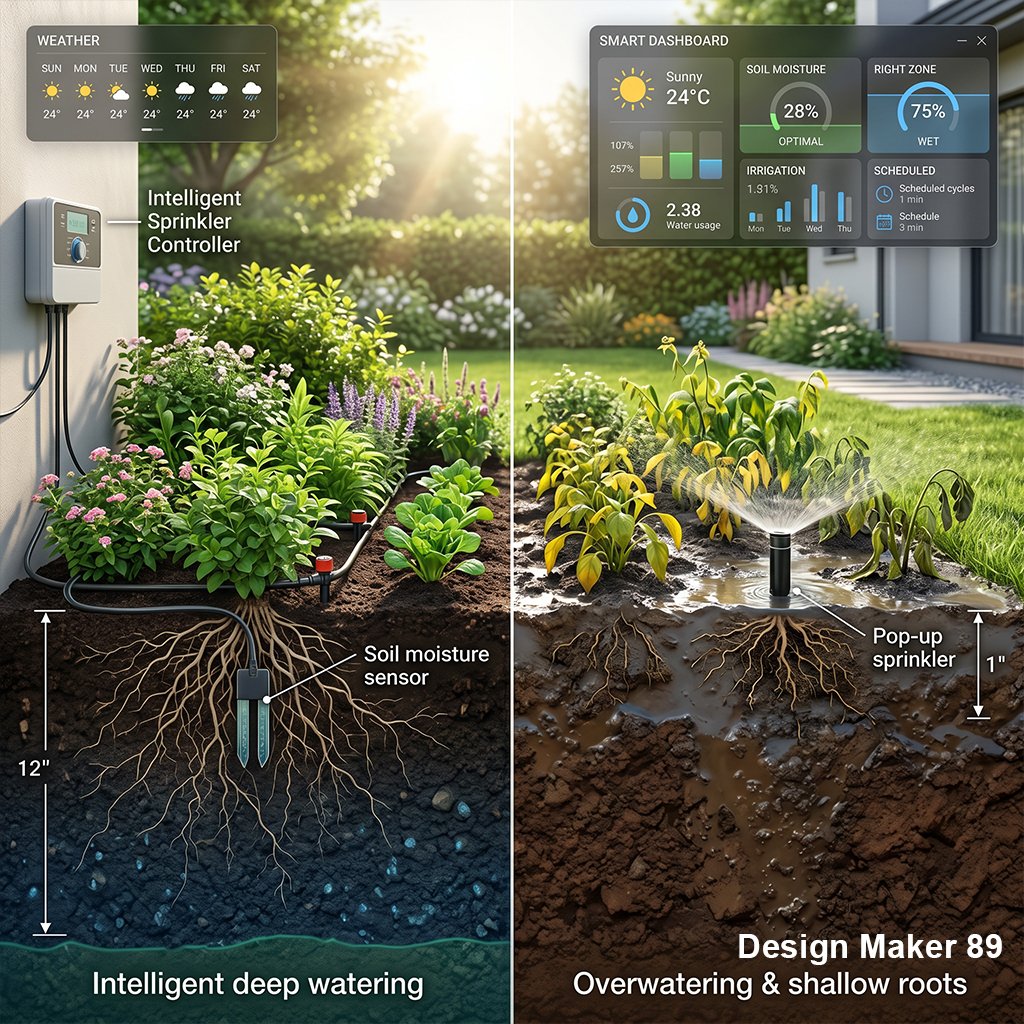
The biggest failure in modern automated irrigation involves the algorithm’s tendency to water frequently for short periods.
I recently audited a suburban garden equipped with a top-tier smart sprinkler controller. The system was watering the lawn for five minutes every single day based on minor local humidity shifts. The grass was yellowing because the constant moisture had rotted the root base.
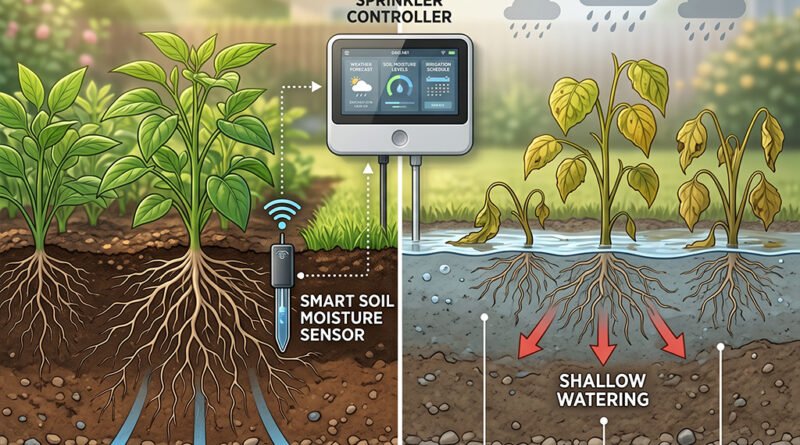
The Lesson: Frequent shallow watering keeps the top layer of soil wet, forcing roots to stay near the surface where they drown or bake. According to The Irrigation Association, successful Smart Irrigation Systems must follow a “Deep and Infrequent” philosophy. It is far healthier to water deeply once or twice a week, encouraging roots to grow downward into the cooler, deeper soil layers.
The “Weather Feed” Delay Blunder
In 2026, smart controllers skip watering if the digital weather forecast predicts rain. While this sounds efficient, local microclimates often trick the software.
I’ve seen instances where a controller skipped a watering cycle because a 60% chance of rain was forecasted, but the actual storm passed three miles away. The garden received zero water during a heatwave.
The Fix: Never rely solely on internet weather feeds. True efficiency requires physical, on-site “Soil Moisture Sensors” and a local rain gauge hardwired into your Smart Irrigation Systems. A digital forecast is just a prediction; physical soil data is a fact.
Why “Clay Soil” Destroys Automated Algorithms
A common technical mistake when setting up Smart Irrigation Systems is failing to input the correct “Soil Texture Type” into the application during initial configuration.
My Personal Experience: I once helped a client whose automated system was puddling water across their entire yard. The software assumed the soil was loam (which drains quickly) and applied water faster than the heavy local clay could absorb it.
The Advice: Clay soil requires a “Cycle and Soak” program—watering for a few minutes, stopping to let the water sink in, and then watering again. For expert guidance on managing soil moisture, refer to The USDA Natural Resources Conservation Service (NRCS) soil mechanics data. If you don’t tell your smart app what kind of dirt you have, it will treat your garden like a sandbox.
The “Nozzle Typology” Calibration Error
Most homeowners swap their traditional controller for a smart one but leave their old, mismatched sprinkler heads untouched.
I’ve seen systems where a single zone contained both high-flow spray heads and low-flow rotary nozzles. The smart controller had no way of knowing this, resulting in one side of the garden drowning while the other side withered.
The Pro Tip: You must standardize your nozzle types within each zone and accurately input the “Precipitation Rate” into the app. In the world of Smart Irrigation Systems, software cannot fix broken hardware or poor plumbing layout.
The “Fungal Disease” App Overload
Smart apps love to show you beautiful charts of “Daily Evaporation Rates,” encouraging you to tweak settings constantly from your phone.
The Strategy: Constant adjustments create an unpredictable environment that favors fungal diseases like Powdery Mildew and Root Rot ($Phytophthora$). Set your smart system to water only in the early morning hours (between 4:00 AM and 6:00 AM). This allows excess moisture on leaves to evaporate quickly under the morning sun. True mastery of Smart Irrigation Systems means using automation to establish a stable, natural rhythm, not to micromanage nature hour by hour.
Why Trust Design Maker 89?
At Design Maker 89, we believe that “Technology Should Support Biology.” Our smart home specialists combine landscape architecture with fluid dynamics to test residential irrigation equipment. We know that in 2026, companies sell software features to disguise a basic lack of agricultural understanding. We test sensor response times, app algorithm accuracy, and water delivery consistency. Our mission empowers you to build a Smart Irrigation Systems setup that conserves water while ensuring your plants thrive for years to come.
read more about
Smart Energy Management | Why Your Thermostat Costs You
Smart Home Privacy | Is Your Speaker Spying on You?
Modern Home Networking | Why Your Mesh System Fails
Smart Lighting Design | Why Smart Bulbs Ruin Your Home
Smart Kitchen Gadgets | Why Your Countertop Is A Graveyard
The Sensor Faucet Scam | Is Hands-Free Actually Stress-Free?