Smart Lighting Design | Why Smart Bulbs Ruin Your Home
Smart Lighting Design | Why Smart Bulbs Are Ruining Your Interior
In 2026, Smart Lighting Design should enhance the atmosphere of your home, not complicate it. Millions of users install RGB smart bulbs and immediately experiment with saturated reds, blues, and purples. While these features look impressive in a 15-second social media clip, they often destroy the “Color Rendering” of your expensive furniture and paint. If you don’t understand color temperature and the psychological impact of light, your high-tech investment will simply create a “visual headache” for everyone in the room.
The “Saturated Color” Interior Sabotage
The biggest fail in modern home automation involves using saturated colors as primary light sources.
I recently walked into a beautifully designed minimalist apartment where the owner had turned all the smart LEDs to a deep magenta. The pink light completely neutralized the subtle wood tones of the flooring and made the high-end sofa look muddy and cheap. The Lesson: Artificial colors distort reality. According to The Illuminating Engineering Society (IES), lighting should reveal the true colors of an interior, not mask them. For successful Smart Lighting Design, keep your primary lights in the “White Spectrum” (from warm candle-light to cool daylight). Save the “Neon Colors” for small accent strips or festive occasions only.
The “Circadian Rhythm” Disruption Mistake
In 2026, many homeowners use “Cool White” (6000K) lighting late into the evening because it feels “modern.”
I’ve seen dozens of people complain about insomnia while their living rooms glowed with blue-heavy light at 11 PM. Blue light suppresses melatonin, the hormone that signals your body to sleep. The Fix: Use “Automated Color Temperature” to follow the sun. Your Smart Lighting Design should transition from bright, cool white in the morning to warm, amber tones as the sun sets. True “Smartness” means your home supports your biology, not fights against it.
Why “Smart Dimmers” Beat Smart Bulbs
A common mistake in Smart Lighting Design is replacing every single bulb with an expensive smart version instead of upgrading the wall switch.
My Personal Experience: I once installed 12 smart bulbs in a single chandelier. Every time someone accidentally flipped the old wall switch, the “smart” bulbs went offline, and I had to reset the entire group via an app. It was infuriating. The Advice: For built-in fixtures, install “Smart Dimmer Switches” instead. This allows you to control standard (and cheaper) dimmable bulbs while keeping the physical wall control functional. For expert guidance on electrical safety and lighting controls, refer to Lutron design resources. Don’t make your lighting system dependent on a smartphone for basic on/off tasks.
The “Multiple Shadow” Clutter Problem
When you place too many small smart lamps in a room, you create “Optical Noise” through overlapping shadows.
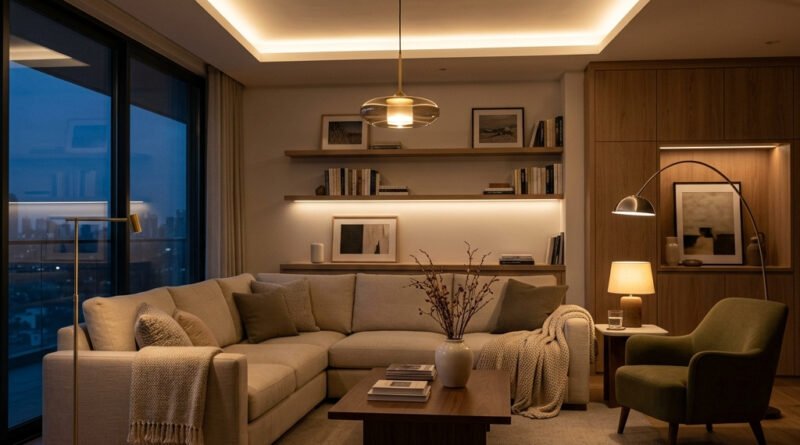
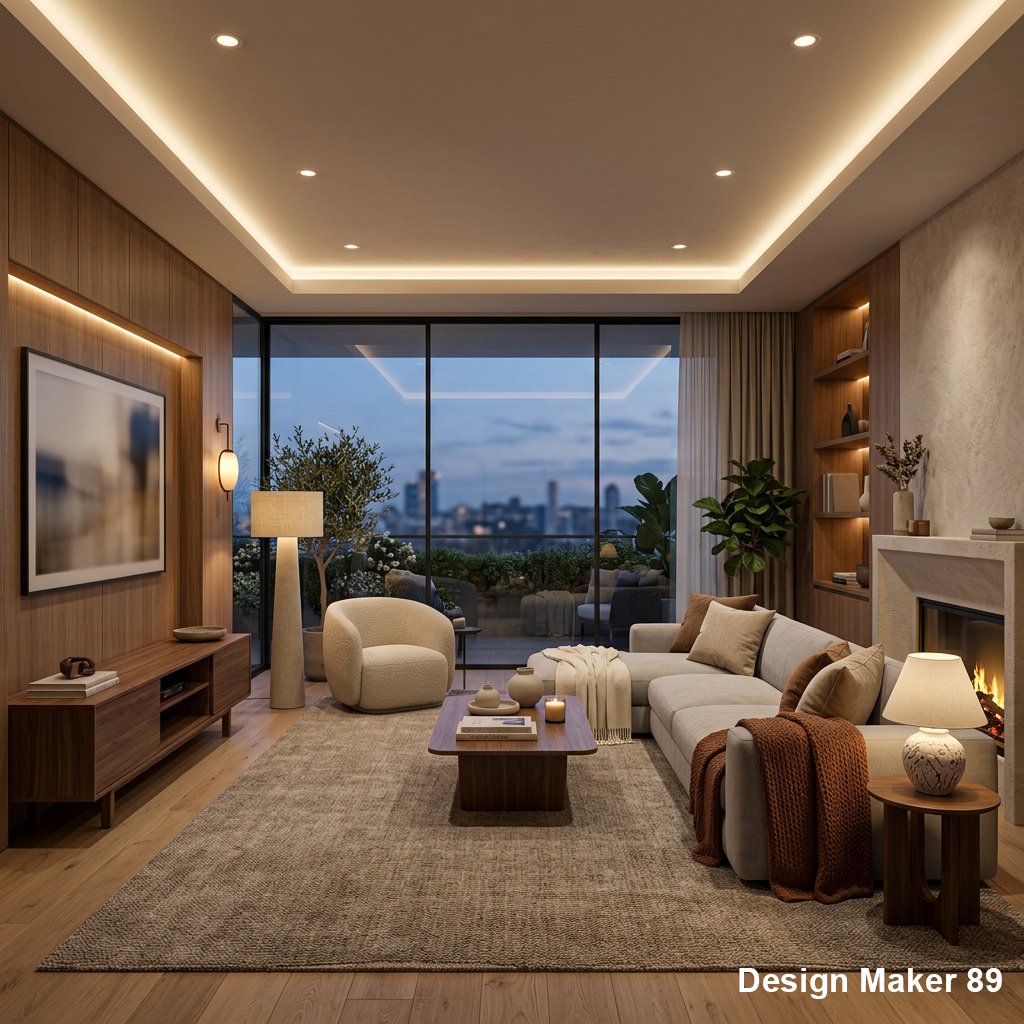
I’ve seen “Smart Living Rooms” that looked cluttered even when clean, simply because five different light sources were casting shadows in five different directions. The Pro Tip: Follow the “Layering” principle. Use one “Ambient” layer for general light, one “Task” layer for reading, and one “Accent” layer for highlighting art. High-quality Smart Lighting Design creates a clean, cohesive look where you notice the effect of the light, not the light bulbs themselves.
The “App-Overload” Operational Friction
Manufacturers want you to open an app every time you want to dim the lights. In 2026, this “Digital Friction” is the #1 reason people abandon their smart home setups.
The Strategy: Invest in “Smart Buttons” or “Motion Sensors.” You should never have to unlock your phone just to walk to the kitchen at night. A motion sensor that triggers a 10% “Night Mode” warmth is a masterpiece of Smart Lighting Design. If you have to talk to a voice assistant or tap a screen for every minor change, your house isn’t smart—it’s demanding.
Why Trust Design Maker 89?
At Design Maker 89, we believe that “Light is a Material.” Our specialists combine electrical engineering with architectural lighting theory. We know that in 2026, companies sell “Gimmicks” like 16 million colors to distract you from poor light quality. We test bulbs for their “Color Rendering Index” (CRI) and flicker rates to protect your eyes and your home’s beauty. Our mission empowers you to implement Smart Lighting Design that feels natural, healthy, and truly sophisticated.
read more about
Smart Kitchen Gadgets | Why Your Countertop Is A Graveyard
Smart Lock Security Risks | Is Your Home Actually Safe?
The Sensor Faucet Scam | Is Hands-Free Actually Stress-Free?
The UV Purifier Scam | Is Your “Smart Water” Just a Light Show?
The Smart Lock Trap | Is Your Digital Key a Security Risk?
The Smart Blinds Scam | Luxury Convenience or Battery Nightmare?
The Automatic Water Bowl Trap | Is Your Tech Poisoning Your Pet?