Smart Energy Management | Why Your Thermostat Costs You
Smart Energy Management | Why Your Smart Thermostat Costs You Money
In 2026, Smart Energy Management is marketed as the ultimate solution for reducing utility bills. Companies like Nest and Ecobee promise that their “AI Auto-Scheduling” features will learn your habits and save you hundreds of dollars annually. However, a thermal reality remains: your home’s insulation and local climate are more complex than a simple algorithm. If you don’t understand “Thermal Mass” and “Peak Hours,” your smart thermostat will likely run your HVAC system more frequently than necessary, leading to higher bills and unnecessary wear on your equipment.
The “Learning Mode” Efficiency Fail
The biggest mistake in contemporary home climate control involves trusting the “Auto-Learning” feature.
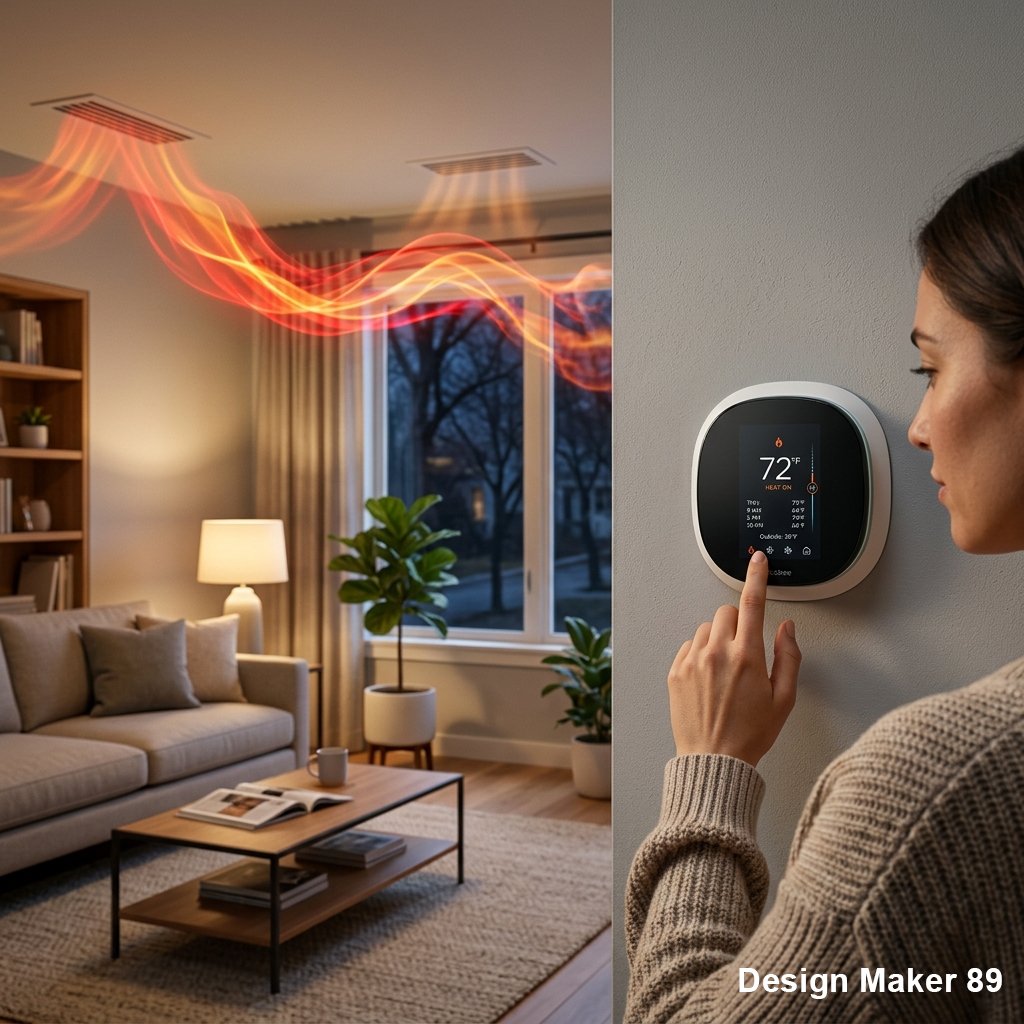
I recently audited a home where the smart thermostat had “learned” a chaotic schedule because the family had erratic weekend habits. The system was pre-cooling the house at 2:00 PM on days when nobody was home, wasting massive amounts of electricity. The Lesson: Algorithms cannot predict sudden changes in plans. To master Smart Energy Management, you must manually set a “Basic Schedule” and only use the “Away” sensor as a backup. According to Energy Star guidelines, manual set-points for different times of the day remain the most reliable way to save energy.
The “Overshooting” Temperature Trap
In 2026, many smart thermostats use a feature called “Early-On” or “Recovery Mode.” While it ensures the house is comfortable by the time you arrive, it often ignores the cost of electricity during “Peak Demand” hours.
I’ve seen dozens of users whose systems kicked into high-power mode at 4:00 PM—exactly when electricity rates are highest—just to drop the temperature by two degrees. The Fix: Disable the “Early-On” feature during peak summer or winter months. High-quality Smart Energy Management requires you to understand your utility company’s pricing structure. Pre-cooling your home at 11:00 AM (at a lower rate) is far smarter than letting a “smart” device battle the afternoon sun.
Why “C-Wire” Issues Cause System Damage
A common technical mistake in Smart Energy Management is installing a thermostat without a dedicated “C-Wire” (Common Wire) for constant power.
My Personal Experience: I once worked with a client whose smart thermostat used “Power Stealing” to stay alive. This caused their furnace’s control board to “chatter” and eventually burn out, leading to a $1,200 repair. The Advice: Never install a smart thermostat using a “power-stealing” workaround. If your wall doesn’t have a C-Wire, hire an electrician to pull one or use a proper external transformer. For expert tutorials on HVAC wiring safety, refer to The Spruce home improvement guides. Your thermostat should not be a parasite on your heating system.
The “Multi-Sensor” Placement Blunder
Manufacturers sell additional room sensors to “balance” the temperature in your home. However, placing these sensors in drafty hallways or near sunny windows creates “Visual Bias” for the thermostat.
I’ve seen systems that blasted cold air into an empty living room just because a sun-drenched sensor in the guest room “felt” hot. The Pro Tip: Place sensors at “Seating Height” in the rooms you use the most. In the world of Smart Energy Management, accuracy is local. If your thermostat is making decisions based on a hot hallway, it isn’t smart; it’s misinformed.
The “Zoning” Myth vs. Reality
Many homeowners think a smart thermostat can create “Zones” without the necessary mechanical dampers in their ductwork.
The Strategy: A thermostat can’t physically stop air from going to a specific room; it can only turn the whole system on or off. True Smart Energy Management requires a “Smart Vent” system or a multi-zone HVAC setup. If you are just closing manual vents to “save money,” you are increasing the pressure on your blower motor, which can lead to a system failure.
Why Trust Design Maker 89?
At Design Maker 89, we believe that “Intelligence is Efficiency.” Our energy specialists combine HVAC engineering with data analysis to find the “Sweet Spot” for your home’s climate. We know that in 2026, “Greenwashing” is rampant in the tech industry. We test thermostats for their sensor accuracy, app reliability, and actual impact on utility bills. Our mission empowers you to build a Smart Energy Management strategy that keeps your home comfortable without breaking the bank.
read more about
Smart Home Privacy | Is Your Speaker Spying on You?
Modern Home Networking | Why Your Mesh System Fails
Smart Lighting Design | Why Smart Bulbs Ruin Your Home
Smart Kitchen Gadgets | Why Your Countertop Is A Graveyard
Smart Lock Security Risks | Is Your Home Actually Safe?
The Sensor Faucet Scam | Is Hands-Free Actually Stress-Free?
The UV Purifier Scam | Is Your “Smart Water” Just a Light Show?