
Kitchen Remodeling | Quartz vs Granite Countertops
Kitchen Remodeling | Quartz vs Granite: The Heat Crack Myth and Durability Reality
In 2026, Kitchen Remodeling projects almost always spark the same intense debate: Should you choose engineered Quartz or natural Granite for your kitchen countertops? Homeowners demand surfaces that balance visual luxury with real-world resilience. Marketing campaigns often label Quartz as indestructible and maintenance-free, while traditionalists praise Granite for its unique, natural aesthetic. However, a material science reality remains: choosing between these surfaces is not just about looks. If you don’t understand how resin behaves under high heat or how porous natural stone can be, you risk ruining a $5,000 investment with a single hot pan or a spilled glass of lemon juice.
The Resin Melting Point Vulnerability
The biggest misconception in modern kitchen design involves the “indestructible” reputation of Quartz. While it consists of roughly 90-93% crushed natural quartz minerals, the remaining 7-10% is a synthetic polymer resin binder.
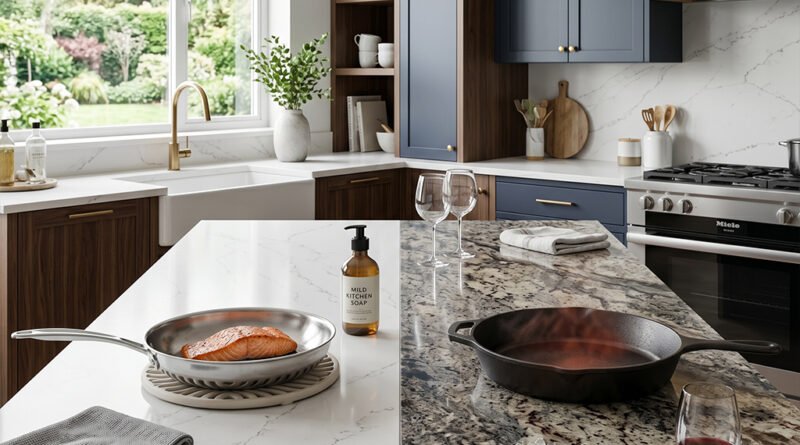
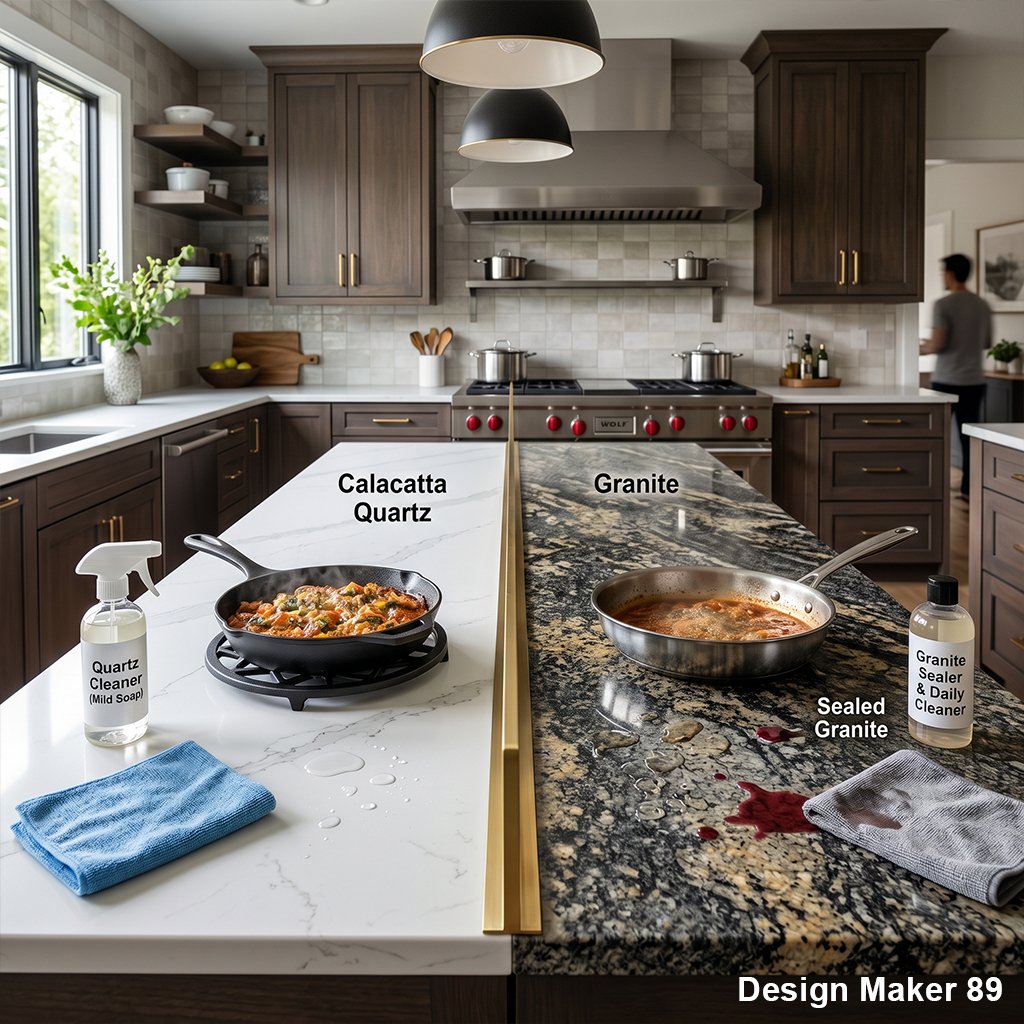
I recently inspected a high-end kitchen where the homeowner had placed a cast-iron skillet directly from the stove onto their brand-new, bright white Quartz countertop. The heat permanently discolored the surface, leaving a yellow, scorched ring. The Lesson: Resin melts and discolors at temperatures above 150°C (300°F). According to testing data from The Marble Institute of America, Granite can easily withstand temperatures up to 600°C without structural damage because it formed under intense volcanic heat. For successful Kitchen Remodeling, you must treat Quartz like an engineered surface; always use a trivet or hot pad.
The Porosity and Sealing Maintenance Trap
In 2026, busy homeowners gravitate toward Quartz because it is non-porous and never requires sealing. Natural Granite, however, features micro-fissures and pores that absorb liquids if left unprotected. I’ve seen dozens of Granite countertops stained permanently because someone left a spilled bottle of olive oil or red wine on the surface overnight. The Fix: You must seal Granite at least once a year to maintain its protective barrier. High-quality Kitchen Remodeling strategy requires you to evaluate your lifestyle. If you want a “zero-maintenance” surface and don’t want to worry about acidic juices etching your stone, choose Quartz. If you love the organic movement of real stone and don’t mind a 30-minute annual sealing routine, stick with Granite.
The Durability Comparison at a Glance:
- Quartz: Completely non-porous, highly stain-resistant, chemically uniform, but vulnerable to thermal shock and direct UV light (can fade near sunny windows).
- Granite: Highly heat-resistant, scratch-resistant, UV-stable, but requires sealing and can fracture if struck hard on the edges with a heavy object.
Why Chemical Cleaners Destroy Countertop Finishes
A common technical mistake homeowners make after a Kitchen Remodeling project is using aggressive bathroom sprays or abrasive scrubbing pads to clean their kitchen surfaces.
My Personal Experience: I once worked with a client who used a bleach-heavy cleaner on their dark Quartz island for three months. The harsh chemicals chemically stripped the glossy shine right off the surface, leaving a dull, foggy patch that required professional diamond polishing to repair. The Advice: Clean both Quartz and Granite using only warm water, a drops of mild dish soap, and a microfiber cloth. For expert chemical compatibility safety guidelines, refer to The National Kitchen & Bath Association (NKBA) material resources. Avoid glass cleaners, vinegar, or citrus-based solutions entirely.
The “Visible Seams” Layout Challenge
If your kitchen layout requires a long run or an L-shaped corner, your installer will have to join multiple slabs together, creating a visible seam.
I’ve seen clients deeply disappointed by their Kitchen Remodeling results because a dark, jagged seam ruined the flow of a bright, veined Quartz slab. The Pro Tip: Because Quartz has a controlled, manufactured pattern, skilled fabricators can match lines more consistently. Granite patterns are completely unpredictable, meaning seams are often more noticeable. Always ask your fabricator to show you a digital “seam layout map” before they cut the stone.
Why Trust Design Maker 89?
At Design Maker 89, we believe that “Material Science Overrules Marketing Promises.” Our interior specialists test surfacing options for stain absorption, impact resistance, and thermal tolerance. We know that in 2026, companies use buzzwords to sell cheaper composites as luxury materials. We cut through the confusion to help you select a surface that matches your cooking habits, budget, and design vision. Our mission empowers you to execute a Kitchen Remodeling plan that stays pristine, functional, and gorgeous for decades.
read more about
Living Room Ideas | Why Accent Walls Make Rooms Smaller
Kitchen Remodeling | Why Open Shelving Is A Disaster
Modern Interior Gallery Walls | The Visual Chaos Myth
Floating Shelf Stability | The Structural Disaster
Modern Living Room Design Ideas | The Hardwood Look-Alike Scam
The Zero-VOC Paint Scam | Are You Still Breathing Toxic Fumes?
The Gray Prison | Why Your “Minimalist” Living Room Is Making You Sad