Backyard Landscaping | The Artificial Grass Myth
Backyard Landscaping | The “Zero-Maintenance” Myth of Artificial Grass
In 2026, Backyard Landscaping trends often prioritize convenience over ecology. Artificial turf has become the “go-to” solution for busy families who want a green lawn without the mowing, fertilizing, or watering. On paper, it saves thousands of gallons of water and hours of labor. However, a thermal and biological reality remains: synthetic grass is a petroleum-based product that behaves like a heat sink. If you don’t understand the “Heat Island Effect” and the loss of soil health, your low-maintenance dream will eventually turn into a scorching, sterile environment that degrades your outdoor living experience.
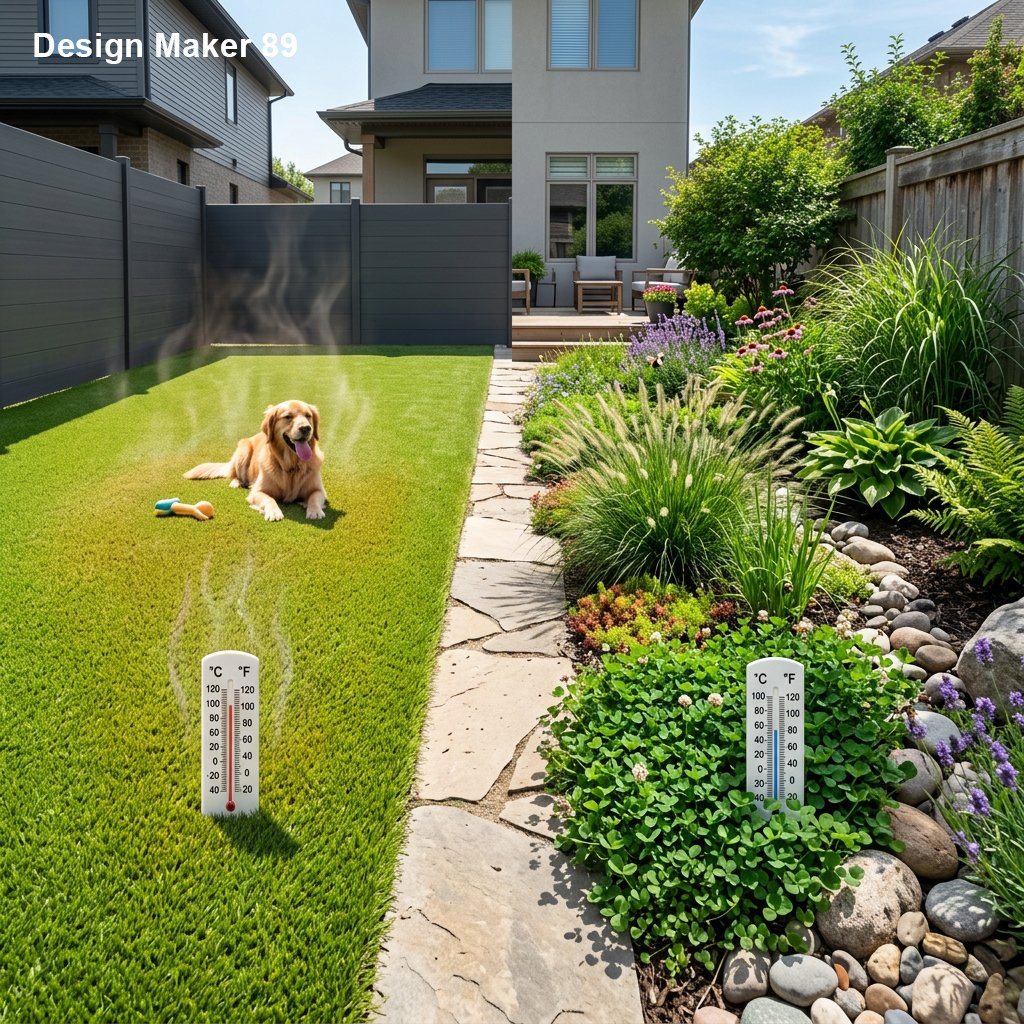
The “Heat Trap” Microclimate Failure
The biggest mistake in contemporary backyard design involves underestimating the temperature of plastic under the sun.
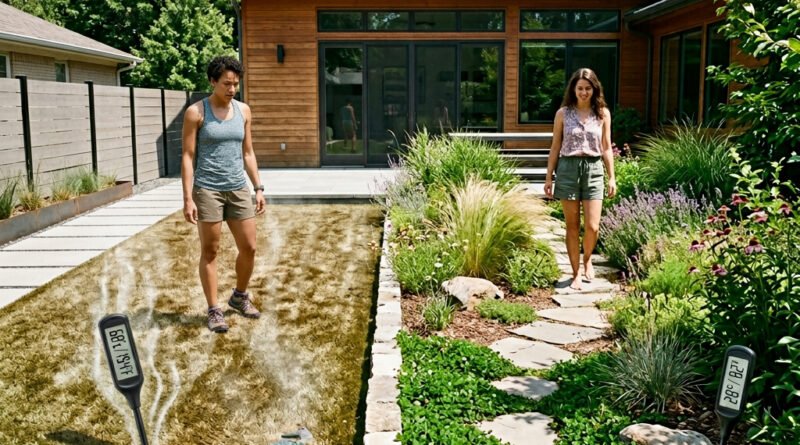
I recently conducted a site visit on a mid-summer afternoon where the natural grass was a cool 30°C, while the adjacent artificial turf measured a staggering 65°C. The Lesson: Synthetic grass does not “breathe.” According to The Pennsylvania State University studies on urban heat, artificial lawns can become hot enough to cause second-degree burns on bare feet or pet paws. For successful Backyard Landscaping, you must consider the local temperature rise. If you live in a warm climate, you are effectively installing a giant radiator next to your home.
The “Sterile Soil” Biodiversity Loss
In 2026, we understand that a healthy garden is a living ecosystem. Artificial turf acts as a plastic barrier that suffocates the life beneath it.
I’ve seen dozens of gardens where the soil became compacted and “dead” after just two years of being covered by synthetic liners. Earthworms, beneficial microbes, and insects disappear, leading to poor drainage and tree root death. The Fix: If you want a low-water lawn, choose “Drought-Tolerant Native Groundcovers” like Clover or Kurapia. High-quality Backyard Landscaping works with nature, not against it. These natural alternatives provide the “Green Look” while supporting local pollinators and keeping the soil alive.
Why “Maintenance-Free” is a Marketing Lie
A common technical mistake in Backyard Landscaping is believing that artificial grass requires no upkeep.
My Personal Experience: I once helped a client who was frustrated by the “pet odor” trapped in their synthetic lawn. Without natural soil microbes to break down organic waste, the plastic fibers held onto smells and bacteria. The Advice: You must regularly “power-brush” the fibers to keep them standing and use chemical enzymes to neutralize odors. For expert guidance on sustainable drainage, refer to The American Society of Landscape Architects (ASLA). A plastic lawn still requires cleaning; it just requires different (and often more expensive) maintenance.
The “Microplastic” Environmental Cost
Manufacturers market turf as “Recyclable,” but in 2026, very few facilities can actually process the complex layers of plastic, latex, and infill.
I’ve seen older artificial lawns begin to “shed” tiny green plastic fibers into the surrounding soil and local waterways. The Pro Tip: Consider “Xeriscaping” with a mix of local stones, mulch, and hardy perennials. In the world of Backyard Landscaping, authentic materials provide a much higher return on investment and a lower environmental footprint. A garden should be a carbon sink, not a source of plastic pollution.
The “Visual Flatness” Design Trap
While high-end turf looks good from a distance, it lacks the seasonal movement and textural depth of real plants, making your home look “artificial” and dated over time.
The Strategy: Use artificial turf only for small, high-traffic utility zones, such as a dog run or a small putting green. For the main visual areas of your Backyard Landscaping, prioritize “Living Layers.” A mix of ornamental grasses and flowering shrubs creates a dynamic, cooling environment that plastic simply cannot replicate. True luxury in 2026 is defined by “Life,” not “Plastic Perfection.”
Why Trust Design Maker 89?
At Design Maker 89, we believe that “A Garden Should Breathe.” Our landscaping specialists combine horticultural knowledge with climate science to create sustainable outdoor spaces. We know that in 2026, “Greenwashing” makes plastic look like progress. We test groundcovers for their cooling properties, water efficiency, and local ecosystem support. Our mission empowers you to plan a Backyard Landscaping project that is truly low-maintenance, ecologically responsible, and naturally beautiful.
read more about
The Smart Hydroponics Scam | Is Your “Free” Salad Costing You $50?
The Zero-Maintenance Lie | Why Gravel and Turf Might Be a Mistake
The Vertical Veggie Fail | Why Your Home-Grown Food Is Dying
The Fiddle-Leaf Fig Hoax | Why Your Luxury Plant Is Losing Leaves
The Self-Watering Death Trap | Why Your Plants Are Drowning